Showing posts with label regret. Show all posts

Saturday, March 25, 2017

"The Discovery"-Afterlife Proven, People Rush To Get There


‘The Discovery’ Review: Netflix Sci-Fi Film Is a Dark, Twisty Spin on the Afterlife | Sundance 2017

     January 21, 2017
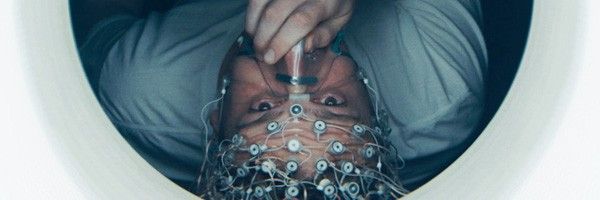
the-discovery-review-netflix
Filmmaker Charlie McDowell’s directorial debut, The One I Love, was a delightful, devilishly dark, and funny spin on the sci-fi genre. The grounded tale of a couple who discover that “perfect” versions of each other exist was a wonderful way to examine the ins and outs of relationships, and it was fun! McDowell’s follow-up film, The Discovery, is very much not that. It’s still a very grounded sci-fi story mind you, but it’s much darker, at times terrifying, and purposefully obtuse. Of course, the tone is fitting given the subject matter: mass suicides are running rampant following proof of the existence of the afterlife. Ultimately, the film’s ambition proves to be larger than its reach, but it’s an admirable and oftentimes effective drama about mortality, regret, and, well, the value of living.
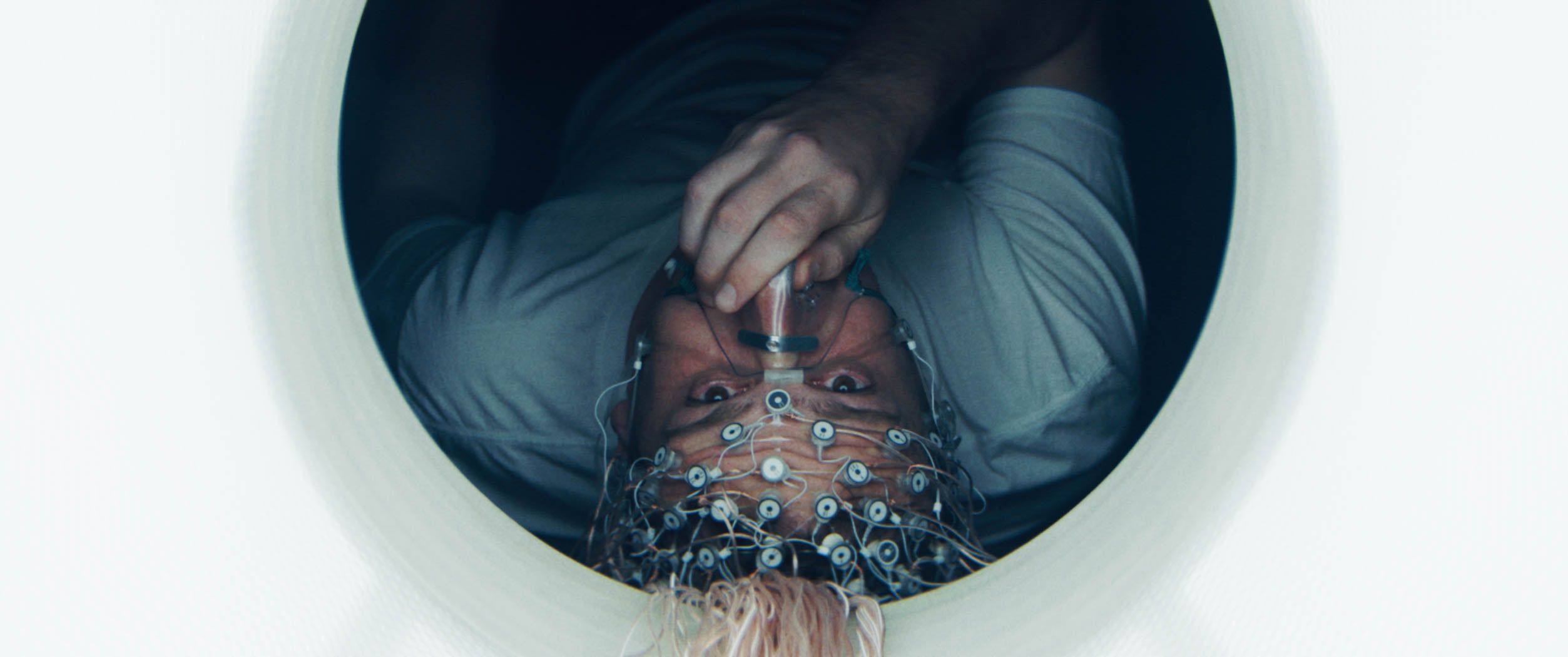
The film opens with a prologue of sorts, in which scientist Dr. Thomas Harber (Robert Redford) is giving his first substantial interview six months after he announced his findings to the world: that the afterlife exists, and he has proof. Through extensive research he’s found the existence of significant brainwaves leaving the body shortly after death. But this “discovery” had unintended consequences as mass suicides shook the world. At the time of the interview, 1 million people have taken their lives in the six months since the announcement. The interview is ended abruptly with a bang, and then the film flashes forward two years later, at which point the suicide toll has reached 4 million.
It’s here where we’re introduced to our main protagonist, Will (Jason Segel). On a ferry to a foggy island, he comes across a young woman named Isla (Rooney Mara). The two strike up conversation and Will expresses his skepticism about the discovery, noting that evidence shouldn’t “overwhelming”, it should be definitive. They part, only to meet again later on when Will rescues Isla from trying to commit suicide herself.
Will, it turns out, is the son of Dr. Harber, and he’s on the ferry in order to meet his father and younger brother—played to delightful perfection by Jesse Plemons—after having fallen out with the family following a tragedy. I’ll leave it there as there are many more plot twists and turns that follow, and it’s best to experience the film as cold as possible.
the-discovery-rooney-mara
Image via Netflix
The Discovery juggles a lot of balls in the air at once, and as it progressed I found myself wondering where it was going—was this a movie about a cult? A father-son drama? A romance? It’s a little of everything, but it doesn’t entirely pull these threads together into a cohesive or satisfying manner by the film’s end. Its ambition proves to be too hefty, but while it doesn’t knock everything out of the park, it is consistently compelling. You never really know exactly where it’s going, which is both its strength and weakness.
Segel is solid as the film’s protagonist, continuing his path of choosing more dramatic roles. It doesn’t touch the greatness of his underrated turn in The End of the Tour, but that’s partly due to the fact that the plot of the film hinges on keeping secrets, so it’s not until well into the movie that you fully understand the emotions at play. Redford is swell as well in a role that’s probably more substantial than you think, but it’s Plemons and Mara who really shine. I don’t entirely know what Plemons was doing with this character—the younger brother everyone assumes is an idiot, but is smarter than he looks/acts despite his devotion to his father’s cause—but he is endlessly watchable. He takes what could have been a throwaway role and makes it entirely unique.
Mara, meanwhile, is playing another somewhat aloof outsider, but she’s so good that the familiarity isn’t much of a bother. Isla, like Will, is a bit of a mystery for most of the movie, but the talent of Mara shines through, making the role compelling even if you’re not entirely sure what she’s all about.
As with The One I Love, The Discovery offers a twist in its third act that I predict will be divisive. I wouldn’t dare spoil it here, but it simultaneously offers more shading to the film overall while also taking your head for a spin. Where The Discovery really shines is in its focus on mortality. Just because we know for certain the afterlife is real, does that mean it’s ethical to call it quits on our mortal life? Isn’t struggle and the bettering of oneself in the face of adversity what makes us the most human? These are big questions and the film doesn’t shy away from them. Indeed, I couldn’t help but feel a pit in my stomach for most of the movie’s runtime. Aside from the fact that the terrific score by Danny Bensi and Saunder Jurriaans is ominous as all get-out, the constant presence of suicide and death forces us to confront our own mortality, however uncomfortable it may be.
the-discovery-jason-segel
Image via Netflix
There are shades of humor here and there, but this is by and large a very dark kind of sci-fi. Its ultimate message may be one of hope, but the stark photography, sterile production design, and somewhat stoic performances give this thing a significant air of seriousness throughout. The grounded approach to sci-fi is welcome in a landscape filled with four-quadrant, bubble gum blockbusters, and even if the film doesn’t entirely come together as a cohesive piece, its admirable ambition and top-notch craftsmanship make it worthwhile nonetheless.
Rating: B-
The Discovery will be available on Netflix starting March 31st.

Wednesday, October 16, 2013

Jackie Hooper - The Things You Would Have Said, If Only ... Death


The Things You Would Have Said

We’ve all missed the chance to say something important. Friends fall out of touch, loved ones pass away, or sometimes the courage required is simply lacking—and thank-yous, regrets, feelings, and secrets are left unshared. In 2009, I came up with a way to help people recapture a moment that had once passed them by—I began asking them to write letters.
From the indignant young boy urging his bully to become “a better man,” to the woman apologizing to the girl she picked on in high school, to a man thanking the woman who protected his family from Nazis, the letters bring together an outpouring of emotion that is as compelling as it is cathartic.
- See more at: http://www.jackiehooper.com/#sthash.67VUKu0j.dpuf

"We don't get to set life's clock.  We may think we have a tomorrow to say all the things we want to say.  Sometimes tomorrow doesn't come and the things left unsaid could end up among our greatest regrets.  What would people say to someone if they had another chance to say it?  If only . . ."

Saturday, November 17, 2012

Death: A Nice Opportunity For The Right Regrets

Regrets are not sexy.  "Regrets...are another human stain."  "I regret to inform you that you, too, are going to die."  "...die with the right regrets."


Death: A Nice Opportunity for Regret
  • FACEBOOK
  • TWITTER
  • GOOGLE+
  • SAVE
  • E-MAIL
  • SHARE
  • PRINT
  • REPRINTS
THOMAS ARNOLD KEMP was executed this past April through lethal injection. He stole $200 from a college student in Tucson in 1992 and then murdered him. It took seven minutes for Mr. Kemp to die. His last words: “I regret nothing.”
Valero Doval
Really?
I have been thinking about Mr. Kemp and death and regret, perhaps obsessively. Regret incites us to review and reflect on our actions; when we miss the mark, regret  generates disappointment and grief. Regret would not have kept Mr. Kemp alive. But it might have kept him decent.
Regret is an essential part of repentance in Jewish law, and, as a Jewish educator, I find myself thinking about regret each year before Yom Kippur. As part of my research into the subject this year, I handed out index cards to my students from age 18 to over 80, and asked them to list a small regret and a large regret.
Here is a random sampling.
In the small-regret category:
I didn’t participate more in school.
I am sorry I didn’t take more vacations.
I was nasty to people.
I regret not trying harder in college.
I should have paused to notice a stranger and to express kindness to them.
I was callous in breaking up with a girlfriend.
I haven’t lost weight.
I did not purchase an exercise bike when it was on a great sale. [I did not make this up.]
In the large-regret category:
I wish I had spent more time with my mother the year she died.
I did not tell a friend why I ended our friendship.
I regret my failure to love my ex-wife in the manner she needed.
I never said thank you to my father.
I could have done more to help my brother when he was despairing and depressed.
I haven’t been more welcoming to my sister-in-law.
I retired too early.
I should have retired a long time ago.
I gave up on too many dreams.
 We rarely connect regret to death, but then we rarely connect death to anything because we’d rather talk about grocery shopping, gardening and taxes.
But, reading my students’ regrets helped me understand the connection between regret and death.
In the course of research for a book on death and how to overcome fear of mortality, I spent years speaking to dying individuals and their families. The notion, famously attributed to Samuel Johnson, that nothing concentrates the mind like imminent death jumped off the page again and again as I conducted my research. Imminent death often occasions self-reflection and, with it, disappointment and remorse.
“I regret nothing,” is code for “I am not going to die.” And maybe that’s what Mr. Kemp thought to himself. Maybe he thought the audacity of regretting nothing would buy him more time. But it just added to his callousness. “I regret nothing” is another way of saying, “I will live in a false, comfortable bubble where I am not accountable for wrongdoing.” Maybe, if we regret nothing, we will live forever.
If you have no sadness or remorse, you are a liar or a denier, or worse still, you haven’t lived. No one makes it through a life without words better left unsaid, poor judgments or thoughtless omissions. I can barely make it through a day without all three.
Kathryn Schulz, the author of “Being Wrong: Adventures in the Margin of Error,” calls regret an “existential wake-up call” and shares research about our top regrets. Most often, these involve mistaken judgments in the areas of education, career choice, romance and relationships, parenting, self-knowledge and the way we spend our leisure time. Few of us focus on regrets involving money.
In a much viewed TED talk, Ms. Schulz offers her tattoo as the ultimate emblem of regret. You may love your tattoo or it may remind you that you are no longer in love with the person whose name is permanently emblazoned on your lower back. Ms. Schulz usesJohnny Depp’s tattoo as an example. “Winona Forever” under laser-treatment after a failed engagement to Winona Ryder became “Wino Forever” on Mr. Depp’s right upper arm. Yes, it’s hard to get rid of regrets. They are stubborn, another human stain, to borrow from Philip Roth.
I have saved my index cards. I asked the original holders of the cards to flip them over and write down one thing they could do to improve how they live. You can’t eliminate a regret, but you can transform one. Imagining a way to fix the future was easier than most students thought and provided a better, more realistic life solution than invincibility. It offered a sliver of optimism. I am keeping the cards because they remind me that death may be around the corner.
I regret to inform you that you, too, are going to die. If you take heart, heed Arthur Miller’s sage advice and die with the right regrets.
A scholar in residence at the Jewish Federation of Greater Washington and the author of the forthcoming book “Happier Endings: Overcoming the Fear of Death.”
This article has been revised to reflect the following correction:
Correction: November 11, 2012
An earlier version of this article included an erroneous description of the writer. As the article noted, she is a Jewish educator, but she is not also a rabbi.