Showing posts with label afterlife. Show all posts

Saturday, March 25, 2017

"The Discovery"-Afterlife Proven, People Rush To Get There


‘The Discovery’ Review: Netflix Sci-Fi Film Is a Dark, Twisty Spin on the Afterlife | Sundance 2017

     January 21, 2017
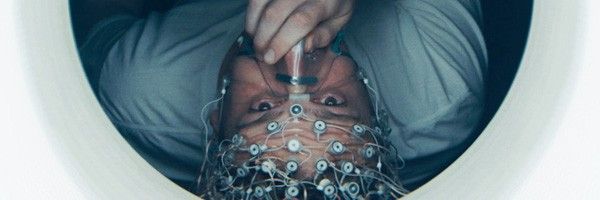
the-discovery-review-netflix
Filmmaker Charlie McDowell’s directorial debut, The One I Love, was a delightful, devilishly dark, and funny spin on the sci-fi genre. The grounded tale of a couple who discover that “perfect” versions of each other exist was a wonderful way to examine the ins and outs of relationships, and it was fun! McDowell’s follow-up film, The Discovery, is very much not that. It’s still a very grounded sci-fi story mind you, but it’s much darker, at times terrifying, and purposefully obtuse. Of course, the tone is fitting given the subject matter: mass suicides are running rampant following proof of the existence of the afterlife. Ultimately, the film’s ambition proves to be larger than its reach, but it’s an admirable and oftentimes effective drama about mortality, regret, and, well, the value of living.
The film opens with a prologue of sorts, in which scientist Dr. Thomas Harber (Robert Redford) is giving his first substantial interview six months after he announced his findings to the world: that the afterlife exists, and he has proof. Through extensive research he’s found the existence of significant brainwaves leaving the body shortly after death. But this “discovery” had unintended consequences as mass suicides shook the world. At the time of the interview, 1 million people have taken their lives in the six months since the announcement. The interview is ended abruptly with a bang, and then the film flashes forward two years later, at which point the suicide toll has reached 4 million.
It’s here where we’re introduced to our main protagonist, Will (Jason Segel). On a ferry to a foggy island, he comes across a young woman named Isla (Rooney Mara). The two strike up conversation and Will expresses his skepticism about the discovery, noting that evidence shouldn’t “overwhelming”, it should be definitive. They part, only to meet again later on when Will rescues Isla from trying to commit suicide herself.
Will, it turns out, is the son of Dr. Harber, and he’s on the ferry in order to meet his father and younger brother—played to delightful perfection by Jesse Plemons—after having fallen out with the family following a tragedy. I’ll leave it there as there are many more plot twists and turns that follow, and it’s best to experience the film as cold as possible.
the-discovery-rooney-mara
Image via Netflix
The Discovery juggles a lot of balls in the air at once, and as it progressed I found myself wondering where it was going—was this a movie about a cult? A father-son drama? A romance? It’s a little of everything, but it doesn’t entirely pull these threads together into a cohesive or satisfying manner by the film’s end. Its ambition proves to be too hefty, but while it doesn’t knock everything out of the park, it is consistently compelling. You never really know exactly where it’s going, which is both its strength and weakness.
Segel is solid as the film’s protagonist, continuing his path of choosing more dramatic roles. It doesn’t touch the greatness of his underrated turn in The End of the Tour, but that’s partly due to the fact that the plot of the film hinges on keeping secrets, so it’s not until well into the movie that you fully understand the emotions at play. Redford is swell as well in a role that’s probably more substantial than you think, but it’s Plemons and Mara who really shine. I don’t entirely know what Plemons was doing with this character—the younger brother everyone assumes is an idiot, but is smarter than he looks/acts despite his devotion to his father’s cause—but he is endlessly watchable. He takes what could have been a throwaway role and makes it entirely unique.
Mara, meanwhile, is playing another somewhat aloof outsider, but she’s so good that the familiarity isn’t much of a bother. Isla, like Will, is a bit of a mystery for most of the movie, but the talent of Mara shines through, making the role compelling even if you’re not entirely sure what she’s all about.
As with The One I Love, The Discovery offers a twist in its third act that I predict will be divisive. I wouldn’t dare spoil it here, but it simultaneously offers more shading to the film overall while also taking your head for a spin. Where The Discovery really shines is in its focus on mortality. Just because we know for certain the afterlife is real, does that mean it’s ethical to call it quits on our mortal life? Isn’t struggle and the bettering of oneself in the face of adversity what makes us the most human? These are big questions and the film doesn’t shy away from them. Indeed, I couldn’t help but feel a pit in my stomach for most of the movie’s runtime. Aside from the fact that the terrific score by Danny Bensi and Saunder Jurriaans is ominous as all get-out, the constant presence of suicide and death forces us to confront our own mortality, however uncomfortable it may be.
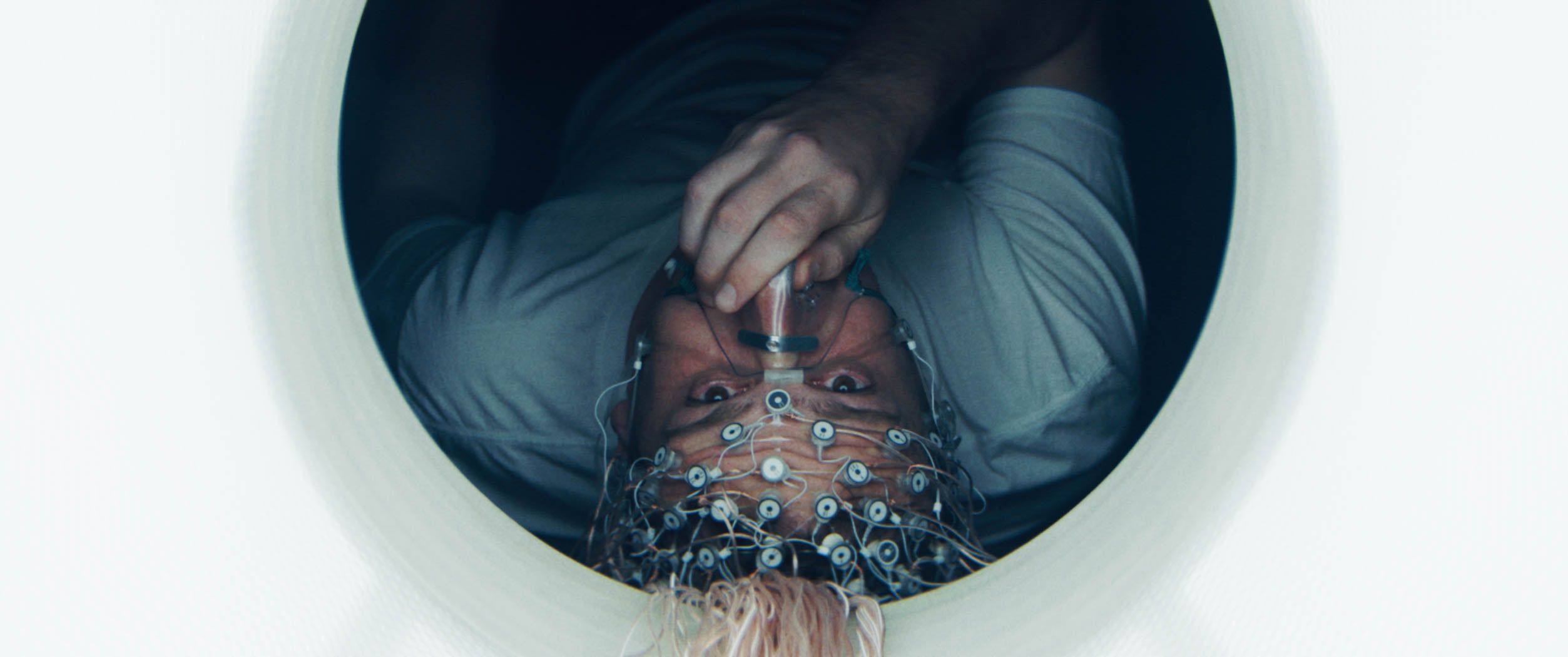
the-discovery-jason-segel
Image via Netflix
There are shades of humor here and there, but this is by and large a very dark kind of sci-fi. Its ultimate message may be one of hope, but the stark photography, sterile production design, and somewhat stoic performances give this thing a significant air of seriousness throughout. The grounded approach to sci-fi is welcome in a landscape filled with four-quadrant, bubble gum blockbusters, and even if the film doesn’t entirely come together as a cohesive piece, its admirable ambition and top-notch craftsmanship make it worthwhile nonetheless.
Rating: B-
The Discovery will be available on Netflix starting March 31st.

Wednesday, January 20, 2016

How To Cheat Death With Immortality Apps

How To Hack The Afterlife


Please scroll down .!


SOURCE: Getty


HOW TO HACK THE AFTERLIFE


WHY YOU SHOULD CARE

Because this is how to die in the digital era. 
For someone so young and sprightly, 24-year-old William Jack Murphy spends an inordinate amount of time thinking about his demise. Based on the stats, he figures colon cancer or a heart attack could get him in the end, and his last breath will probably be mid-sentence during a conversation about cyborgs. But mostly he’s focused on the radical ways he’ll evade the Grim Reaper’s unwelcome scythe altogether. Yes, there is an app for that, one that will preserve his online data — texts, timelines, tweets and all — before it crumbles into digital dust. 
To the clunky urns and graveyard grievings of yesteryear, RIP. A growing number of artificial-intelligence startups are stirring up the business of eternal rest with a techno-futurist mission in mind. Humai will pour your speech patterns, mannerisms and worldviews into an app so your loved ones can still text with you when you’re six feet under. A startup called eterni.me will bequeath a computer-based avatar to your friends and family, so they can posthumously Skype with you. And if that’s not enough, you can commemorate yourself with ETER9, an AI-infused social network that will generate posts on your behalf and interact with other netizens long after you’ve kicked the bucket.
Posthumous hacks could be even more devastating to the living than grave digging
Forging a digital afterlife isn’t about living in your body forever, says Humai CEO Josh Bocanegra. It’s about moving on without it — complete with a digital resurrection that will bring your essence back to life even as your flesh rots away. That’s far more meaningful to the survivors than just photos, says Bocanegra. As for Murphy, a self-dubbed “techno-philosopher,” he’ll have a sophisticated algorithm that will reconstruct his personality by scanning his texts, emails, pictures, profiles, feeds and the rest of his digital footprint. He intends his post-death self to opine over politics with his dad and snap crude jokes with his brother, just as he does now, and to give advice to his future kin, much like a modern-day Ouija board. Murphy’s dying words won’t be his last. For now, he says, “We are living in exponential times.”
Indeed, experts predict the artificial-intelligence industry will grow from $202.5 million to $11.1 billion by 2024, and it’s perhaps not surprising that it’ll revamp our afterlife trajectories too — and possibly make the ancient industry of death turn in its grave. But it will, of course, take a while. Most of these startups are busy with beta testing and are slated to be released to the public in the next few years. Together, they’ve already registered tens of thousands of people eager to memorialize themselves and cheat death, so to speak, once the technology is out. ETER9 is free to join, but eterni.me’s post-death avatars range from a small monthly subscription fee until the day you depart to thousands of dollars up front in order to build a digital dossier of your life. Even then, it’s much too early to pin down the price tag of immortality, Bocanegra says.


Doubts linger over the feasibility of such a larger-than-life endeavor. There are obvious questions about how realistic these replicas could ever be; our online personae usually reflect just a glimmer of our multifaceted selves. And yes, the prospect gives plenty of people, from ardent transhumanists to modern-day philosophers, the creeps. This is not the way to commune with the dead, argues Shelly Kagan, a philosophy professor at Yale University. For one, you’re not really chitchatting with sweet ol’ Grandma Perkins, since on a “metaphysical level” it’s more like a substandard Xerox copy of her. Death can be pushed but never denied, and “no technology is going to fix that.” Others argue that creating replicas of loved ones will just postpone grief and closure. 
Other concerns are less, well, otherworldly. Security is one of them. An untimely breach could “echo through eternity” and result in the alteration of someone’s legacy, says ETER9 founder Henrique Jorge. Indeed, posthumous hacks could be even more devastating to the living than grave digging or body snatching. There are risks for the living too: Storing such intimate personal data in one place makes services like these attractive targets for identity thieves hoping to score big. 
But these companies say they’re ensuring that their systems are hack-proof, privately storing and securely encrypting each user’s data, Jorge says. In addition, the information cannot be downloaded in bulk by anyone — even users can access only limited interfaces. For people like Murphy, the apps make consummate sense. As he points out, he would have treasured more time with his mother, who died from colon cancer two years ago. Murphy says an artificially intelligent version of her would have undoubtedly helped alleviate the sorrow his family endured.
His biggest takeaway from her death? “I’m not ready to die any time soon.” Murphy wants his legacy to rage, rage against the dying of the light, even if just through the faint gleam of a computer screen.
Leslie Nguyen Bio

LESLIE NGUYEN-OKWU 

OZY AUTHOR REPORTER / RESEARCHER
Leslie Nguyen-Okwu is OZY's Southeast Asia roving reporter. Stuff she loves: running half-marathons (in sweltering Thai heat), chowing down on local street food and fumbling with new languages.

Thursday, October 22, 2015

Decode Last Words of Dying=Afterlife Evidence?!


Philadelphia Inquirer, Sunday, September 27, 2015, HEALTH section, Page G1, Front Page:


Study aims to decode final words of the dying

image: http://media.philly.com/images/600*503/20150927_inq_hs1words27-c.JPG
At the start of the event "The Unintelligible Afterlife: What Deathbed Conversations Tell Us About a World Beyond," (from left) moderator Curtis Childs with Raymond Moody Jr., Lisa Smartt, Erica Goldblatt Hyatt, Dan Synnestvedt, and the Rev. Jonathan Rose. Smartt started the Final Words Project, which spawned a study at Bryn Athyn.
At the start of the event "The Unintelligible Afterlife: What Deathbed Conversations Tell Us About a World Beyond," (from left) moderator Curtis Childs with Raymond Moody Jr., Lisa Smartt, Erica Goldblatt Hyatt, Dan Synnestvedt, and the Rev. Jonathan Rose. Smartt started the Final Words Project, which spawned a study at Bryn Athyn. WILLIAM THOMAS CAIN / For The Inquirer
image: http://media.philly.com/images/172*120/20150927_inq_hs1words27-b.JPG
At the start of the event "The Unintelligible Afterlife: What Deathbed Conversations Tell Us About a World Beyond," (from left) moderator Curtis Childs with Raymond Moody Jr., Lisa Smartt, Erica Goldblatt Hyatt, Dan Synnestvedt, and the Rev. Jonathan Rose. Smartt started the Final Words Project, which spawned a study at Bryn Athyn.GALLERY: Study aims to decode final words of the dying


Lisa Smartt, a poet and linguist, became fascinated by the beautiful, weird, cryptic words of the dying during her father's last days in 2012.
"I can't reach, Jack," he said. "My modality is broken." And, "There is so much so in sorrow." And, the one that stunned her, because he was not a religious man: "Lisa, you were right about the angels!"
She started the Final Words Project to collect other departing thoughts that people sent her. By nature, it was not scientific. These were anecdotes, words that relatives had taken the time to record and had deemed meaningful.
Her project, though, has spawned a study based at Montgomery County's Bryn Athyn College that will record the words - all of them - of people dying at home in the care of hospice. The goal is to analyze how communication changes in the last six weeks of life, in order to make the process less mysterious - and frightening - to family members and medical providers.
MORE COVERAGE
  • Fitness test tells if you'll die within 10 years
  • The first-of-its kind study will be run by an unusual trio: Smartt; Erica Goldblatt Hyatt, a psychology professor at the college; and Raymond Moody Jr., who is famous for studying near-death experiences (he coined the term in 1975) and who has more recently focused on categorizing nonsensical speech. His 70 kinds of nonsense will provide a template for analyzing some of the odder utterances.
    The three of them spoke last weekend to more than 400 people at Bryn Athyn College's Mitchell Performing Arts Center. The event, titled "The Unintelligible Afterlife: What Deathbed Conversations Tell Us About a World Beyond," raised money for the research. Goldblatt Hyatt said grant funding was out because the project doesn't fit into the usual categories. She hopes to enroll five to 20 people in the study this year.
    Despite the provocative title, Goldblatt Hyatt said that, for her, the study was not aimed at finding evidence that people who are dying are transitioning into a spirit world.
    "I'm very skeptical with regard to language of the afterlife," she said. "We are not looking to prove that consciousness exists after death."
    Moody's work chronicling bright lights, out-of-body experiences, and reunions with the departed for people on the brink of death is seen by many as evidence of an afterlife. But he, too, cautioned about reading too much into the phenomena he studies.
    "Whether our spirits live on is an important philosophical question that science is not yet able to investigate," said Moody. A philosopher before he was a physician, Moody, 71, is energetic and infectiously curious.
    He discounted the idea that the visions he has recorded are the result of dying brains, saying such things have also been experienced by traumatized but healthy people.
    Of the three, Smartt is the one who views the words of the dying as a potential window into something else. As she writes on her website: "It is possible that the language of end of life is a 'transitional' language that emerges as we transition from life here on earth to another life, or another dimension."
    Another possibility, she said during her speech Saturday, is that the way people speak at the end may reveal changing abilities. "Are we wired for transcendental experience at the end of life?" she asked.
    She said metaphors about travel - "Jetta. I need to get my Jetta" - and big events figure prominently in many of the last words people have sent her. The dying also talk of seeing other people in rooms that appear empty to their relatives.
    Moody said nonsense can be statements that don't make sense because they are factually wrong or statements that use made-up words or real words that don't belong together. Think nursery rhymes, doo-wop music and Dr. Seuss.
    At the end of life, he said, people frequently say things that don't make sense. Yet it is also common, he said, for relatives to say what a religion professor told him about her husband: "I knew it was nonsense, but, in the back of my mind, I felt I knew I understood."
    He asked how many in the audience had had a similar experience. Lots of hands shot up.
    People are more likely to remember the last words that make sense, he said. He's excited that the new study will record all of the language, giving better insight into how the mind is changing.
    Goldblatt Hyatt said she was "intrigued by the idea that the words of the dying might mean more than the living can appreciate." She wants to untangle linguistic patterns and analyze psychological themes. She's interested in whether personality remains stable through the dying process and whether the visions people describe or metaphors they use reflect the beliefs they've had throughout their lives.
    The work, she said, may make it easier for families to "enter into the reality" of their dying loved ones, rather than deny it.
    Matthew Mendlik, a neurologist and palliative care doctor at the University of Pennsylvania, said people who have near-death experiences are different from the truly dying in a key way that may be scientifically significant: They survived. He added that much of the way the brain works, both when it is healthy and when it is dying, remains a mystery.
    It is not surprising, he said, that there might be common experiences as the body declines. "They call death the great equalizer for a good reason."
    He said delirium, which causes visions, is common at the end of life. However, he said, we don't know why particular visions happen.
    He agreed it was common for the dying to begin seeing or talking to people who are long dead. That, he said, "is one of the markers to us that things may be getting toward the end."
    It is not final words that families ask him about most frequently. They are much more likely to wonder what to do when their loved ones stop talking. Families ask whether they can they still hear and understand.
    Always assume they can, he tells them.
    sburling@phillynews.com
    215-854-4944
    @StaceyABurling

    Read more at http://www.philly.com/philly/health/20150927_Study_aims_to_decode_final_words_of_the_dying.html#P7iz8y7iZyVwlFGH.99

    Saturday, September 20, 2014

    "The Afterlife" - Father Mourns Son As Death Plays Out Over Time


    New York Times, Sunday, July 13, 2014, SUNDAY REVIEW, Page SR8


    Photo
    CreditKiersten Essenpreis
    Continue reading the main storyShare This Page
    BOSTON — “WHEN was the last time you shopped for car insurance?” asks the letter, which arrived the day before Father’s Day. “If your answer is ‘I haven’t done that in years,’ you may be missing an opportunity to save money and get great service from GEICO.” The letter is addressed to our son, David.
    “Treat yourself to a welcome offer,” American Express writes David, providing “an exclusive invitation to apply for our most rewarding Gold Card.”
    L.L. Bean has sent him a new Visa Card. His old one is about to expire.
    “One Week Left: David, Don’t Miss Out on 25,000 Bonus Miles,” Delta Air Lines writes in an email to our son, whom it deems “a valued SkyMiles member.”
    On the other side of the equation, the I.R.S. writes David to tell him that he owes $5.68 based on his 2010 Form 1040.
    All of them assume a tone of urgency. But David is now and forever beyond both opportunity and obligation. Two and half years ago, he died after mixing heroin and alcohol, at the age of 21.
    That has not stopped the slow and steady trickle of mail and email, oblivious to our loss. A part of me is resentful that it continues, and yet, I keep each bit of mail and email in a file marked “David,” knowing full-well how foolish and pathetic it is. But I cannot do otherwise.
    Indeed, in some strange way, I cherish them all — even the dunning notice from the I.R.S. — as if each were a signal from the Great Beyond that it didn’t happen, that his life goes on, that the nightmare was just that, something from which I may surface at any moment. The Delta miles unredeemed, the credit card renewed, the debt unpaid, are each, in their sorry way, welcomed. I hold on to them, as if, one day, I might have cause to forward them to him. It is the last responsibility left to me as a father. That is the one thing I cannot seem to let go of, the need to watch out for him. The role of father is not so easily extinguished.
    I cannot help but marvel at the momentum that life takes on, how it has a continuity that disregards death, a commercial and mechanical force all its own. It is as if the cosmos has not yet gotten the memo, part of a grand disconnect. Our son soldiers on in the realm of credit cards and frequent flier miles. The interest on his savings bond continues to accrue. (A sympathetic bank manager said she would allow me to forge his signature, but I prefer the knowledge that at least the bond will reach maturity.) The tragic and the mundane run their parallel courses, never intersecting. It is all a perfect reflection of my own denial.
    The thing about death is that it is not nearly so final or absolute as those in mourning may wish. The sheer momentum of our being has its own trajectory that animates the dead and taunts — or comforts — the living.
    On the flight from Akron to Boston, as we carried our son’s ashes home, the alarm on his cellphone went off in the overhead compartment, telling him it was time to get up and go to class. I jumped up out of my seat and tore his suitcase apart desperately trying to silence the alarm.
    Eleven months later, I come upon his dog-eared copy of “Make Way for Ducklings.” On the back cover, I discover a note in pencil and in the hand of a child. It reads: “WAKE ME UP PLEASE PLEASE PLEASE PLEASE.”
    If only I could.
    I had nearly forgotten how death plays out over time — not the biological episode that collapses it all into a nanosecond of being and nonbeing, but the slower arc of our leaving, the long goodbye — sorting through the mail, paying the bills, stumbling upon notes. It is like the decommissioning of a great battleship. There is the official notice and ceremony, and then the long and agonizing process that follows — the disposition of so much tonnage. Eulogies are never the last word.
    I have been through this before. My father was 50 when he died. A year later I got a letter from him. It was covered in postmarks of various countries as it tried to keep pace with my travels. Finally, exhausted, and freed of forwarding addresses, it found its way back home. I opened it with trepidation, knowing these would be the last words I would hear from him. He wrote of Mother’s burning the chocolate chip cookies, of having to open up the windows in January to let the smoke out, and the neighbors thinking him crazy. And it closed with an off-color joke about Nixon. I laughed. And then, I cried.
    A few months after David’s death, my wife and I attended a gathering of grieving parents who spoke lovingly of their lost ones, and then of the knowledge that their child was now at Jesus’ side. There was a light in their faces. I envied them their resurrection, and did not return.
    Have I no more than these solicitations, these invitations, these letters delivered late? I do. I have memories. I have places where I feel both his closeness and his distance. And I have the all-too-brief visitations allowed in dreams. For the nonbeliever I’ve become, it is what passes for an afterlife.