Tuesday, November 7, 2017

M.C. Escher Begging on Eternal Stairway/Moses Followers Swim In Parted Red Sea


Bizarro, October 30 and 29, 2017 :

Bizarro


Saturday, November 4, 2017

The Future of Anti-Aging


Harper's Bazaar, November 2017, 150th Anniversary Issue, P. 316 :

The Future of Anti-Aging

Experts believe that exciting new innovations in the longevity space may one day redefine the way we age—and help us look better as we do it.

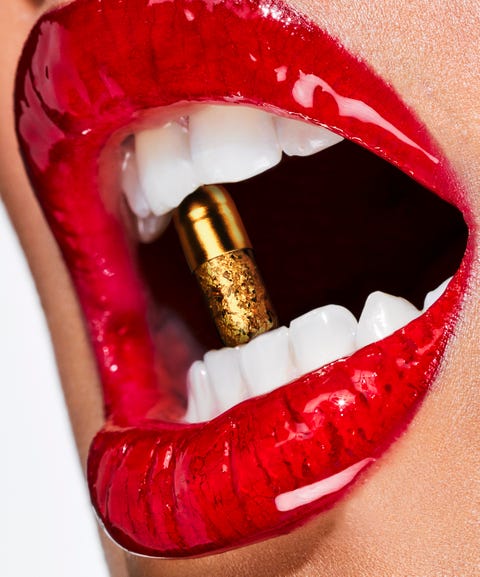
Fake fuller, younger-looking lips with Laura Mercier Lip Glacé in Poppy($26).
Kenneth Willardt
“Technology has reached a point where extending animal life span by 30 percent is routine,” says David Sinclair, a professor of genetics at Harvard Medical School and a renowned authority on longevity. “Dozens of companies are testing aging-reversal technologies in human clinical trials, and the combination of these could extend life span by decades.” Why is that a good thing? Because with science, those additional years could be happier, healthier ones. It does seem cruel, however, to have all that extra time if we’ll also look 150 years old. Fortunately, the most visionary anti-aging treatments on the horizon make pioneering plastic-surgery procedures seem run-of-the-mill. Read on to find out how a key supplement, DNA editing, and young blood could someday add years to your life, erase wrinkles, and potentially wipe out age-related diseases.
A molecule called NAD+ may hold the secret to boundless energy. The good news: Our cells already produce it, as it helps regulate our metabolism. The bad news: NAD+ declines as we age—by 50, levels are half of what they were at age 20. But scientists have discovered some powerful boosters that can help cells produce more NAD+. One of the most promising is NMN (nicotinamide mononucleotide), a form of vitamin B3 found in fruits and vegetables like avocado and broccoli. A 2013 study showed that older mice that were given an NAD+-boosting compound containing NMN had dramatically healthier cells and muscle tissue. “We took a mouse that was the human equivalent of a 65-year-old back to a 25-year-old—in a week,” says Sinclair, one of the study’s authors. What’s more, he says, the mice not only had more energy and could run farther but were resistant to diseases like cancer and diabetes. “If you reverse aging in one organ or tissue, usually the whole body is reversed, because all cells have the same underlying defects,” he explains.
Could NMN have the same effect on us? Sinclair, 48, has been taking his own custom NMN supplement (500 milligrams) for almost two years. Tests have revealed that his cells now behave like that of a 31-year-old. “I started taking it in my late 40s, and sometimes in your late 40s you feel tired during the day or you don’t feel like getting up early in the morning,” he says. “I don’t feel that way anymore. I feel upbeat mentally and physically, and I have the endurance of an athlete, but I don’t exercise.”
"You may one day be able to delete the negative signs of aging from your DNA for good, say scientists."
Another NAD+ booster, NR (nicotinamide riboside), found in ChromaDex’s Tru Niagen supplement (different in molecular structure from NMN, which Sinclair says is “better” and more stable than NR), can easily be purchased online, and has been shown to be safe in humans. “A single dose of 100 milligrams can raise NAD+ levels,” says Amy Boileau, director of scientific affairs for ChromaDex. Boileau believes that restoring depleted NAD+ levels could lead to fewer wrinkles but that additional testing is required. “It’s not hard to find a disease associated with NAD+ depletion that doesn’t also affect [visible aging],” she says. “I would like to see it work in skin because there’s so much promise there. It’s going to be an important question as to the role NAD+ can play.”
Advertisement - Continue Reading Below
In August, Sinclair and his team began human trials on a prescription-strength NMN NAD+ booster. “We’re trying to see if it’s safe, and what the best dosage would be before going into Phase II studies with a particular disease, like diabetes or obesity,” he explains. The idea that a simple molecule could restore lost energy and wipe out major diseases seems like a fantasy. But Sinclair is resolute. “Antibiotics are pretty simple too,” he says with a shrug. “We first showed that NAD+ extends the life span of cells back in 2003, but now it’s really taken off. It’s real.”

Look Younger by Editing Your Genes

You may one day be able to delete the negative signs of aging from your DNA for good. In late summer, the news was ablaze with talk of a fascinating procedure. Scientists at Oregon Health & Science University successfully removed harmful gene mutations from human embryos. Specifically, they fixed a mutation behind a common heart condition. Using a gene-editing tool known as CRISPR, or “genetic scissors,” they cut out the mutation and inserted a reparative enzyme. “If you want to add functionality to a gene, knock it out altogether, or change it just a little bit— that’s what CRISPR gave us the ability to do,” says biologist Daisy Robinton, a postdoctoral scientist at Boston Children’s Hospital who has used it in her work on cancer cells to positive result.
Though there were related stories warning of more nefarious uses for gene editing—designer babies, for example—for now, the focus is on higher-stakes concerns. Many CRISPR human trials are currently being done in China on patients with HPV, HIV, and lung cancer. “At first it’s going to be used only on cases where it’s worth the risk,” Robinton says, “and on people who are willing to take the risk because they don’t have many options.” As to whether CRISPR will be used for vainer pursuits—think curing baldness, eliminating gray hair, erasing wrinkles—Robinton, 30, is optimistic. “This isn’t the first time that biotech has invaded the beauty space,” she says. “It’s not [yet] real, but it’s our hopeful reality.”
Shutterstock
Other forms of genetic rejuvenation are being pursued by BioViva, a Seattle biotech company led by Elizabeth Parrish, 46, a self-described humanitarian, entrepreneur, and innovator. Two years ago, Parrish traveled to Colombia to receive two experimental anti-aging gene therapies: one meant to decrease the depletion of lean muscle mass; the other to increase the length of her telomeres, the end segments of DNA that shorten each time a cell divides. When telomeres reach a certain length, cells no longer divide and eventually die. If they could be extended, the thinking goes, so would the life cycle of the cell, thus prolonging its—and, by extension, our—existence. BioViva wants to make gene therapies like these as common as preventative medicine, Parrish says, and is developing targeted treatments for aging-related degenerative conditions, such as Alzheimer’s, and cosmetic procedures, like skin rejuvenation. “If we can’t regenerate the skin, the largest organ, you’re going to die,” explains Parrish. “People need to understand that this is not aesthetics—this is survival.”
Advertisement - Continue Reading Below
And it’s also not a fantasy: The FDA recently approved a gene-altering leukemia treatment developed by the pharmaceutical giant Novartis. Yet some in the scientific community were rattled by Parrish’s self-experimentation. For her part, Parrish, who, it must be noted, is not a scientist, professes to be unconcerned, claiming that her biomarkers (such as triglycerides and inflammation—both down since her personal trial) are “fantastic,” and believes that her company’s therapies will be available to consumers within the next two decades. “This is proven science,” she says. “We just need to prove it in humans.”

Blood Transfusions to Turn Back the Clock

Another youth-focused start-up is the San Francisco–based Ambrosia, which specializes in infusing blood—specifically “young” blood, from teenage donors (ages 16 and up)—into older clients, in hopes of regaining stamina, improving cognition, and repairing muscles. Why teens? Because younger blood has far lower levels of the harmful proteins that build up with age, which may cause decreased production of brain cells and inflammation. (If it sounds ghoulish, keep in mind that platelet-rich plasma therapy, which uses vials of your own blood, has long been used to treat injuries, osteoarthritis, and hair loss.)
Still, the science behind young-blood transfusions, which has focused primarily on mice, is somewhat inconclusive. That hasn’t deterred Ambrosia founder Jesse Karmazin, M.D., from trying for a moon shot. Yet when word of Ambrosia’s efforts began to spread, it was met with some healthy skepticism and not a little ribbing: Recall the “blood boy” episode of Silicon Valley. The problem, according to Karmazin, 32, is that what he’s doing is still so new, it’s misunderstood. “People thought my idea was crazy. Until recently, anti-aging wasn’t really a field. But it’s amazing how quickly it’s exploded,” he says. “There’s all this research and decades of experiments in mice showing that it reverses aging, so I thought, ‘Why aren’t we doing this in people?’ ” Ambrosia is recruiting participants between the ages of 35 and 100 for a clinical trial to evaluate Karmazin’s theory, and expects to publish the findings within the next year. So far, Karmazin says, the results are “strong.” He has estimated that patients would need to have transfusions only twice a year to maintain the benefits. “People look younger when they leave the clinic. We’ve all been surprised at how well it seems to work,” he says. “A crucial part of the picture is that [blood transfusions are] an already proven medical treatment—we’re just purposefully using younger donors. If you get a transfusion, you’re likely going to get blood from someone who is older than you. But if we could encourage younger people to donate blood, it could help reverse aging.”
"Encouraging younger people to donate blood could help reverse aging," says Jesse Karmazin, M.D.

The Future Is Soon

Given how promising this sounds, it would be tempting to seek out a doctor who specializes in longevity and offer yourself up to science. Not so fast, says Sinclair. “Gene therapy is risky. Unlike a pill, if there’s a problem you can’t just stop taking it. It’s there forever.” And right now it’s also breathtakingly expensive: Novartis’s gene therapy costs $475,000. That makes the $45 price tag for a month’s supply of Tru Niagen feel like couch change. There is good news, however, and it’s not just for babies. With a wellspring of money into longevity research from tech companies like Google, experts feel confident that in the next five to 10 years, supercharged anti-aging treatments like these will begin to come to market. “I don’t want to get wrinkles or gray hair, and I want to be able to lift weights and run forever,” says Robinton. “It’s important to be grounded in reality, but I feel the science is closer than ever before.”

Tuesday, October 31, 2017

Compost Your Dead Pet !!!!!


'It's going to weird some people out': A new company will compost your dead pet

Play Video 3:31
This guy thinks you should compost your dead pets
Embed
Share
Paul Tschetter, a general manager at Rooted Pet, explains why he thinks composting your pet is the best option for disposing of your pet's body after it dies. (Monica Akhtar/TWP)
What happens to Fido after he dies?
Yes, of course, all dogs go to heaven. Their bodies, however, are another matter. And when dealing with those, pet owners have options aplenty: cremation, burial at a pet cemetery, taxidermy, even freeze-drying or turning their ashes into synthetic diamonds.
Now comes another: composting. A start-up in Washington state, Rooted Pet, says its new service is something the “pet aftercare space” has been lacking — and one owners can feel good about. Letting kitty decompose in a mixture of organic matter uses less energy than firing up a cremation oven, requires less land than a graveyard and is a poignant, dust-to-dust type of process, general manager Paul Tschetter says.
With cremation, “you’re quite literally vaporizing the soft tissues . . . it’s pulverized and put in a cute box and given back,” said Tschetter, whose firm is located outside Olympia, Wash. “I feel like we’re adding more meaning back into this whole death process.”
This could be a mental hurdle for many grieving pet owners, but Tschetter is probably onto something. The $67 billion pet industry includes a growing aftercare segment catering to owners who, after spending lots keeping animals they consider family members happy and alive, are willing to go to extra lengths when the pets die. More than 700 pet cemeteries and crematoriums in the United States are one testament to the demand.
“If you’re in this business right now,” Tom Flynn, the president of Hillcrest-Flynn Pet Funeral Home and Crematory in Hermitage, Pa., told Bloomberg Businessweek in 2012, “you’re just sailing with the wind right at your back.”
Tschetter describes himself as a “serial entrepreneur,” who, along with a friend who had years of experience in waste management and composting, realized a few years ago that there might be room for new ideas in this market. Composting animal carcasses, they knew, is far from unusual — it’s the method many farms use to dispose of deceased livestock, and it’s how some states now contend with roadkill.

Rooted Pet composts deceased pets at its farm in Washington state. (Courtesy of Rooted Pet)
Donated farm animals, as well as some collected roadkill, were what Rooted used as “test subjects” for their composting system, said Tschetter. The system is based at his business partner’s farm, but it’s all indoors, which helps the company avoid some regulatory hurdles that would come along with composting bodies outside. Pet carcasses are placed in boxlike “pods” with wood chips and other organic matter, Tschetter said. Six to eight weeks later, the cocktail has morphed into rich soil that looks, smells and feels like any other compost, he said.
“We’re literally taking what happens in nature and speeding it up,” he said, referring to the decomposition that would occur if you buried your pooch in the backyard (which many jurisdictions do not allow). But, he acknowledged, “it’s a newer thing and it’s going to weird some people out.”
Given the one cubic yard size of the pods, the company for now can only accept animals weighing up to 100 pounds, Tschetter said; so far it has composted mostly dogs and cats, but also a few birds and a snake. But that might change. Rooted presented at a recent veterinary conference in Washington state last month, and Tschetter said the response from area veterinarians — who will be the primary go-betweens linking pet owners to the composting business — has been “overwhelming.”

Clients can choose to purchase a plant growing in the compost created from their pet’s remains. (Courtesy of Rooted Pet)
People who decide composting their dead pet is right for them can choose from several end products. Let Rooted keep the compost and it will use it on its farm or on a tree-planting project. Get your composted pet back (alone or, for a lower price, mixed with other pets), and you can use it to nourish a new tree in your yard. If that seems a bit too hands-on, Rooted can send you a houseplant growing in compost created from your beloved animal’s remains.
It would be, Tschetter said, a “living memorial.”
Read more:
Lulu the dog flunked out of CIA bomb-sniffer school because she just didn’t care
A woman’s dog died, and doctors say her heart literally broke
The strange and deadly saga of 15 circus cats’ final week in America
Pete the parrot is getting a prosthetic foot. Then he has to learn to live with it.

https://www.washingtonpost.com/news/animalia/wp/2017/10/24/a-new-company-composts-dead-pets-gross-or-strangely-touching/?utm_term=.b189791ddb64

Saturday, October 21, 2017

How Many Healthy Yrs Do YOU Have Left?! Calculator Developed by Scientists !


Kim Komando :


How many healthy years do YOU have left? Use this calculator developed by scientists to find out

How many healthy years do YOU have left? Use this calculator developed by scientists to find out
© Darren Baker | Dreamstime
Let’s face it. The older we get, the more we think about our mortality. I’m sure many of you are wondering how long you have to live and how many years will be healthy ones.
If you could find out your life expectancy, would you want to know? Would you be willing to adopt a more healthy lifestyle to add on a few more years?
Scientists at the University of Connecticut have developed an online calculator that can determine how many healthy years you have left.
While you may think it’s all about you, information like this also impacts the medical industry and society. Your health and those in your community influence medical costs, financial planning and health support services.
Measuring this quality of life is referred to as "healthy life expectancy" and  "unhealthy life expectancy." An unhealthy life is a severe enough form of disablement that there’s no recovery. It’s the way you remain until death.
Adding "healthy life expectancy" and "unhealthy life expectancy" together gets you the grand total of years you have left.
How the calculation works
Scientists give an example of a 60-year-old man who eats healthy, exercises regularly, sleeps at least eight hours a night and has a healthy body mass index.
The calculator suggests he could have another 13 years of healthy living compared to someone not as healthy.
Interesting since there’s a big difference in healthy life expectancy that’s influenced by lifestyle choices, something each person has control over.
Influencers
Two factors we don’t have control over are our age and gender but it still impacts our healthy life expectancy. How long we can expect to live obviously decreases with age. Women typically live longer and healthier than men.
Diet, exercise and sufficient sleep all positively impact our healthy life expectancy along with education, income, our own mental state of our health, moderate alcohol consumption, not smoking and not being diabetic. The more money you make and the more education you have, the higher your healthy life expectancy. Having a positive attitude about your health also helps.
Factors not taken into account include your level of stress, how positive your attitude is toward life and social connections.
Do you want to know?
This is the first time a measurement tool like this has been available. Obviously, it’s still a little early to determine the accuracy of the calculations. It’s simply an educated prediction. Scientists, though, have been careful to model their assumptions on actuarial sources to make sure results are logical and consistent.
Scientists plan to expand their studies and look into how healthy life expectancy can help with retirement financial planning. For example, discretionary retirement spending should happen during healthy years; basic expense spending increases during unhealthy years.
Based on all of this information, are you curious about how many healthy years you have left? Do you want to find out?   
While we’re growing older, there are ages where we peak at doing everything.

Here's the age you peak at everything, according to science


https://script.google.com/macros/s/AKfycbyuBYOmrAt4KEdpbu871fISJmOvgA2_72XY0gaFYkJVB4xNJawZ/exec

Pounds
Feet
Inches


Friday, October 20, 2017

Expanding Technology for Senior Care


FierceRetail :


Lowe's expands technology for senior care

Lowe's Iris Care allows for at-home senior care.
According to the AARP, 90% of seniors want to stay in their own homes as they age. In response to the needs of this population, Lowe's has launched a special line of smart home products that help seniors to "age in place." Called Iris Care, the technology will help family members feel secure about their loved ones, even as 82% of seniors plan to remain at home even if they begin to need day-to-day assistance.
Iris Care is programmed to notify a family member when a loved one's daily routine has been disrupted.
Some of the ways in which members can use Iris Care include:
1. Triggering an alarm if a door is left open for a period of time.
2. Informing a contact if a loved one has taken medication using a medicine cabinet sensor.
3. Indicating when a loved one has not moved or gotten up from bed.
Iris Care integrates with smart speakers such as Google Home and Amazon Echo.
Care has been a feature of Iris since Lowe’s launched the smart home platform in 2012. But over the past five years, the Iris team has been refining and enhancing the service, introducing new compatible devices (Iris-branded and third party) and rules.
"We are constantly hearing on social media, in the Iris community and in reviews how our customers use Iris to help look after loved ones," Mick Koster, vice president and general manager of Iris Home Systems, told FierceRetail. "Customers express their gratitude for achieved peace of mind, but most importantly show their appreciation for helping monitor their loved ones’ wellbeing in their homes and allowing them to stay in their homes longer than might have otherwise been possible."
Although some consumers might be wary of how to use the Iris technology, Koster says it is designed for easy setup and use, with a single mobile app to manage home management and security needs.
"In fact, Iris has DIY in its DNA, meaning you can build your smart home at your own pace, based upon you or your loved one's needs," Koster said.
When smart home technology launched a few years ago, customers were primarily looking into energy efficiency and some basic home automation. But today, Koster says customers are using the systems to secure their homes and keep their loved ones safe.

RELATED: Lowe's expands smart home solution
He expects that as the smart technology becomes more affordable and the offerings become more expansive, adoption will continue to grow among consumers.
"No longer is smart home technology solely for the early adopter or the rich and famous; consumers are coming on board because smart homes are becoming more approachable, accessible and, most importantly, more affordable," Koster said.
Especially with the expanding popularity of products like Google Home and Amazon Echo, customers are starting to see the benefits of interfacing with voice-activated technology.
"In addition to serving as an easy entry point to the market, smart speakers help consumers realize that smart home technology isn’t so intimidating and is actually quite useful," Koster said. "By integrating our technology with Google’s, everyone can now enjoy the benefits of controlling your devices just by speaking."
RELATED: Lowe's launches home security solution
Moving forward, Lowe's is well positioned to deliver the state-of-the-art platform.
"We’ll see more of this play out throughout next year as we expand the features, integrations and services available through Iris to bring smart homes and home improvement closer together," he added.

Thursday, October 19, 2017

Nanotechnology Gray Goo Ends Universe, Planet, Everything !!!!!?????


Uncubed Daily, uncubed.com :

Culture |

Could Nanotechnology End the World, the Universe, and Everything?


Nanotechnology promises revolutions in health, manufacturing, and technology.

It could also drown the universe in an endlessly self-replicating "gray goo".
Is this the way the world ends? Find out right here.

Nanotechnology promises revolutions in health, manufacturing, and technology. It could also drown the universe in an endlessly self-replicating “gray goo”.
Is this the way the world ends?

Please copy and paste links below to watch video, or click on video below (safe, takes you to video about gray goo and the end of the world at uncubed.com) :

https://uncubed.com/daily/this-is-the-way-the-world-ends-nanotechnology/


<iframe src="https://player.vimeo.com/video/238970030" width="640" height="640" frameborder="0" webkitallowfullscreen mozallowfullscreen allowfullscreen></iframe>


hero

Halloween + = Honor the Dead, Most Unusual Fall Traditions in Europe


AFAR :

Better than Halloween: The Most Unusual Fall Traditions around Europe
 
 
Original 0c71f4b3b7a48bc287ecf405b216782e.jpg?1443741262?ixlib=rails 0.3
After over a decade spent in the Mediterranean, far from the hoards of trick-or-treaters back home in the Midwest, Halloween is one of my favorite holidays. That said, most places in Europe have cool traditions of their own at the end of October and early November. They may not involve massive quantities of name-brand candy and costumes, but there are plenty of good eats and flower-laden, candlelit cemeteries. Many regional celebrations span an entire week, or at least a long weekend. Here are a few favorites from around Europe.
Austria, Germany and Switzerland: Root goblins, carols and hidden knives  
For All Hallow’s Eve, Austrians leave a light on all night, as well some bread and water for the dead. In Germany, kids carve Rübengeister, root monsters, from beets or turnips to scare away bad spirits and their parents put away knives before bed to keep the departed from harming themselves.
Around Germany, Austria and Switzerland, Protestants honor Martin Luther’s birthday on November 10th, and Catholics celebrate St. Martin’s Day, on November 11th. Most Martin-themed events involve students singing for treats door-to-door or in street processions, marking the time of year when farm-workers’ children went to the houses of wealthy land-owners caroling, begging for food and gifts to get their families through the winter after their parents were dismissed to survive the coldest part of the year with no income. In Catholic areas, the traditional meal for this occasion is goose with red cabbage and dumplings—St. Martin was said to have hidden in a goose corral to avoid being ordained bishop.
Spain, Portugal and Italy: Chestnut parties, skeletal sweets, and marriage proposals
Special food and a day off are a common theme in these Southern European countries, where the faithful pray for the deceased and leave flowers on their graves.
Bakers prepare unusual sweets around Spain and Italy from late October to early November. All around Spain, you can buy Huesos de Santo, cylindrical marzipan cookies filled with candied egg yolk said to resemble the bones of Saints. While Sicilians make their own bony cookies scented with cloves, delicate Fava-bean-shaped cakes called Fava dei Morti are ubiquitous throughout Italy. In an interesting twist, in Rome and surrounding areas, on November 2nd, young men hide rings in boxes of "dead bean" cakes, propose marriage, and depending on their luck, announce engagements. Further south, in Sicily, children believe that if they’re good and pray for the dead all year, the departed will bring them candy dolls.
article continues below ad
Portugal and parts of Northern Spain celebrate with seasonal produce and chestnut “parties”. For Tosantos in Cadiz, Spain, locals dress up the livestock at market, and make effigies of politicians and celebrities out of fruits, vegetables and nuts on October 31st. A day later, in Extremadura, young people go from door to door singing and begging for fruits in season like walnuts, chestnuts, and pomegranates. In Catalonia, bakers roll marzipan in pine nuts to make panellet cookies, roast chestnuts and sweet potatoes and enjoy la Castanyada with their families, friends and plenty of Muscatel wine on the last day in October. Around Portugal, these parties, known as Magusto, are typically outdoors around a bonfire and often coincide with All Saints on November 1, or St. Martin’s Day on November 11th. People sing, drink, roast chestnuts in the fire and play practical jokes. 
Ireland and the UK: Fruitcakes, Straw men, and Fireworks
While Americanized Halloween is more popular than many locals would prefer and regarded mostly as an excuse teenagers use to wreak havoc, it’s common knowledge that modern Halloween traditions were imported from the British Isles long ago. Many customs are thought to be derived from the Celtic end-of-summer festival Samhain.
Children stateside are warned about razors in candy from strangers—in Ireland, children and adults alike have to watch out for foreign objects in their main course and dessert prepared by family members. Coins are hidden in potatoes served with curly kale and onions in a dish called Colcannon. The potatoes are followed up with barnbrack, a fruitcake with symbolic souvenirs baked into it. Biting into a piece of rag could mean your financial future is bleak, and a ring may mean you’ll soon be married. Kids still play games of knock-a-dolly, pounding on doors, and running away before anyone can answer.
Meanwhile in the U.K., Guy Fawkes Night, celebrated November 5, is more popular than All Saints or All Hallow’s Eve. Originally a celebration of King James I surviving Guy Fawkes's attempt on his life in 1605, the holiday has lost some of its political significance, but continues to be a popular outing. Dramatic firework shows have been added to the long-standing tradition of hoisting a straw figure representing Guy Fawkes into the bonfire.
article continues below ad
Czech Republic, Poland and Slovakia: Illuminated cemeteries, funerary art thieves, and meals with the dead
In this part of Europe, All Saints is a weeklong affair welcoming deceased souls back to the land of the living, starting November 1st. In countries like Czech Republic, Poland, and Slovakia, locals decorate the graves of loved ones with flowers and candles or lamps. It’s the perfect time of year for a moonlit stroll around historic cemeteries—even the abandoned tombs of the long dead are cleaned up and decorated this time of year. In Poland, All Saints and All Souls, or Zaduszki, is still so widely celebrated that there’s heavy traffic on routes to cemeteries and the holiday has become notorious for on-top-of grave robbing, as thieves steal and resell funerary lamps and wreaths.
Most of these traditions are derived from a Slavic holiday called Dzaidy, when the ghosts of ancestors and relatives were summoned to dine in the homes of the living. The lamps and candles used to illuminate graveyards are what remain of the ancient rites of lighting fires on burial grounds to keep lost souls warm. Spitting and heavy work are still frowned upon on these dates, out of respect for the dead. Houses are cleaned, doors are left open, and food and toiletries are put out to welcome the dearly departed. Czechs and Slovaks toast the deceased with cold milk to cool the souls roasting in purgatory and place chairs by the fireside on so that loved ones, from this world and the next, can sit and spend time together.
>>Next: 8 Surprising Things That are Actually Offensive in Europe